Volume of Composite Figures Worksheets for 5th Grade
Download PDF worksheetAnswer key (PDF)Worksheet + answer key (2 pages)
Prints on one US Letter page; the answer key is a separate page. Print at 100% / "Actual size" on US Letter paper. Free for personal and classroom use. Version 1 of 10. Choose another version.
Skill: Finding the volume of figures made of two rectangular prisms
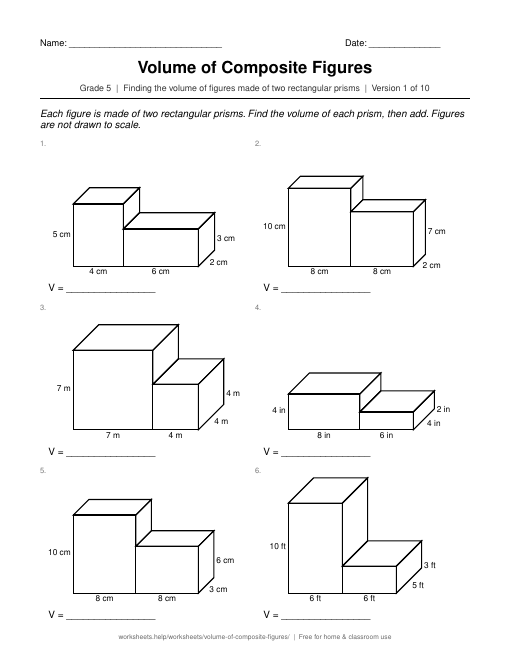
Teaching tips and what to try next
Split the figure into two rectangular prisms, find each volume, then add. The tricky part is finding the missing dimensions, so have your child label every edge first. Review Volume of Rectangular Prisms if needed.
10 versions, each with its own answer key
Same skill and layout, a fresh set of problems in every version, so children can keep practicing without repeating a page. Problems are not repeated between versions unless a skill has only a small number of possible problems (for example, the addition facts within 10).
- Version 1: Sheet · Key · Both
- Version 2: Sheet · Key · Both
- Version 3: Sheet · Key · Both
- Version 4: Sheet · Key · Both
- Version 5: Sheet · Key · Both
- Version 6: Sheet · Key · Both
- Version 7: Sheet · Key · Both
- Version 8: Sheet · Key · Both
- Version 9: Sheet · Key · Both
- Version 10: Sheet · Key · Both
Download all 10 versions (one PDF)All 10 answer keys (PDF)
Make a new one
Want more practice? Make a brand-new Volume of Composite Figures sheet with fresh problems and its matching answer key, created right in your browser.
Related worksheets
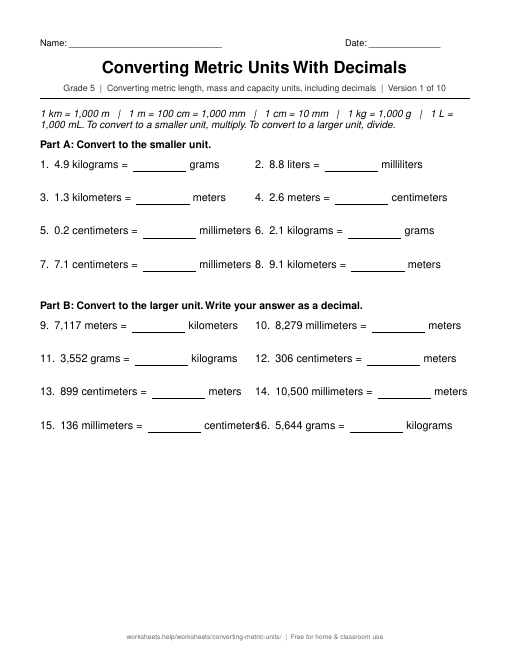 Converting Metric Units With Decimals
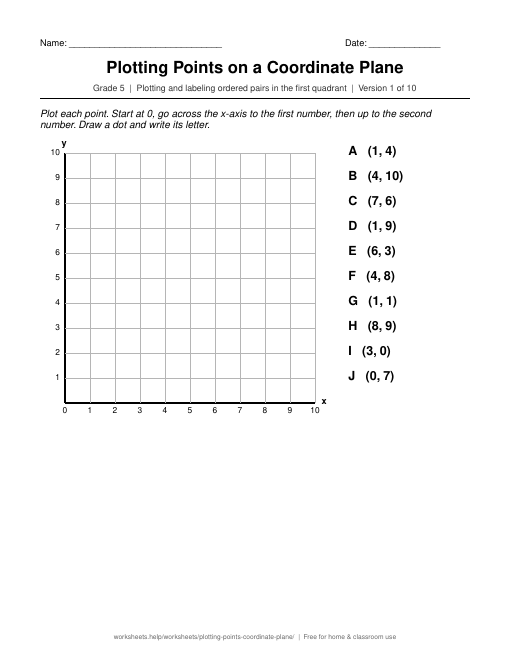 Plotting Points on a Coordinate Plane
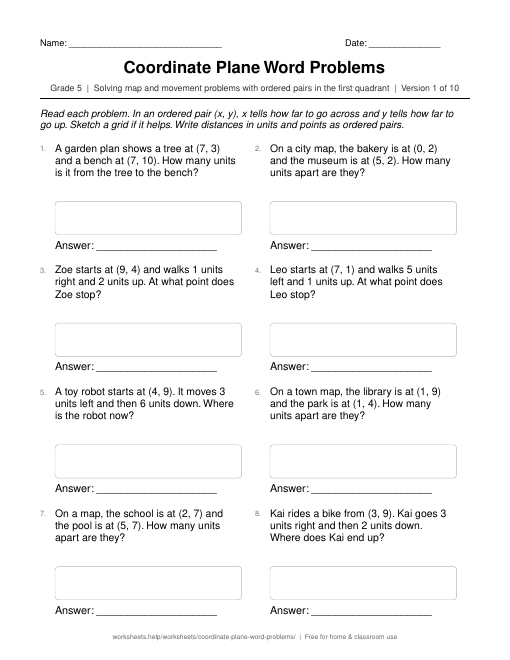 Coordinate Plane Word Problems
About this worksheet
Fifth graders learn that volume is additive: if a solid figure is made of two rectangular prisms that do not overlap, its volume is the sum of the two volumes. This worksheet has six L-shaped figures. Each one is two prisms side by side with the same depth, and all the measurements needed are labeled.
The figures use centimeters, inches, feet and meters, and answers are written in cubic units. Each of the 10 versions has new figures and measurements. The figures are not drawn to scale, so children must use the labels instead of guessing from the picture.
How to use it: have your child trace or color the two prisms in different colors first, so it is clear where one ends and the other begins. Then find each volume with V = length x width x height and add the two volumes. Remind them that both prisms share the same depth label. Building a figure from snap cubes is a great way to see why the two volumes add up, and to check an answer by counting.
The answer key gives each volume with its unit. For a warm-up, try our Volume of Rectangular Prisms worksheet.