Multiplying by 11 and 12 Worksheets for 4th Grade
Download PDF worksheetAnswer key (PDF)Worksheet + answer key (2 pages)
Prints on one US Letter page; the answer key is a separate page. Print at 100% / "Actual size" on US Letter paper. Free for personal and classroom use. Version 1 of 10. Choose another version.
Skill: Multiplying 11 and 12 by numbers from 1 to 12
Teaching tips and what to try next
Ready for fourth graders who know the facts through 10 × 10 and can double numbers quickly. Linking the 12s to real things, such as eggs in a dozen or inches in a foot, gives a quick reason to know them. Next, multiply two-digit numbers in Two-Digit by Two-Digit Multiplication.
10 versions, each with its own answer key
Same skill and layout, a fresh set of problems in every version, so children can keep practicing without repeating a page. Problems are not repeated between versions unless a skill has only a small number of possible problems (for example, the addition facts within 10).
- Version 1: Sheet · Key · Both
- Version 2: Sheet · Key · Both
- Version 3: Sheet · Key · Both
- Version 4: Sheet · Key · Both
- Version 5: Sheet · Key · Both
- Version 6: Sheet · Key · Both
- Version 7: Sheet · Key · Both
- Version 8: Sheet · Key · Both
- Version 9: Sheet · Key · Both
- Version 10: Sheet · Key · Both
Download all 10 versions (one PDF)All 10 answer keys (PDF)
Make a new one
Want more practice? Make a brand-new Multiplying by 11 and 12 sheet with fresh problems and its matching answer key, created right in your browser.
Related worksheets
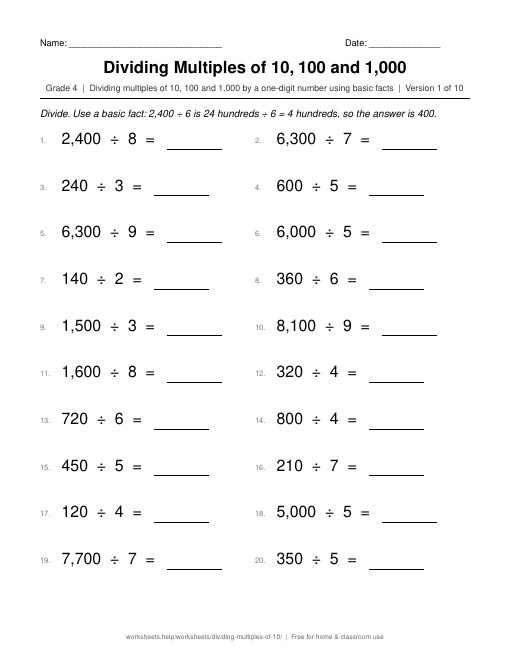 Dividing Multiples of 10, 100 and 1,000
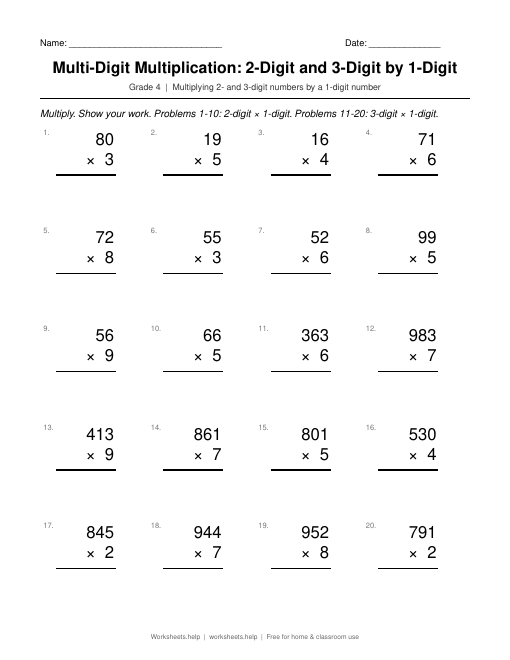 Multi-Digit Multiplication: 2-Digit and 3-Digit by 1-Digit
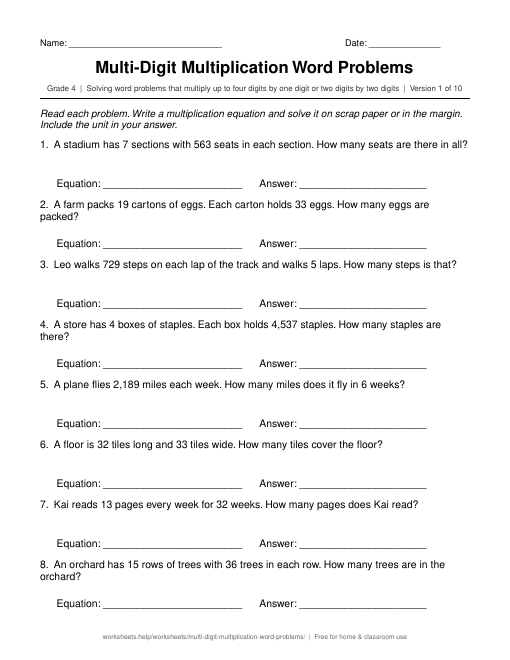 Multi-Digit Multiplication Word Problems
About this worksheet
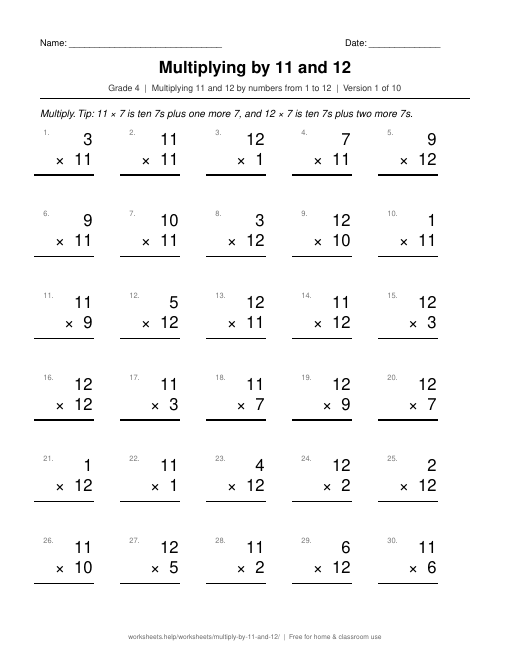
Once the facts to 10 are solid, many fourth graders are asked to learn the 11s and 12s too. These facts show up when working with a dozen eggs, a foot of 12 inches, or a year of 12 months, and they are a nice bridge to multiplying by two-digit numbers. This fourth-grade worksheet gives thirty vertical multiplication problems that use 11 or 12 as one factor.
The other factor goes from 1 to 12, and the 11 or 12 can be on the top or the bottom of the problem. That mix helps children see that 12 × 5 and 5 × 12 have the same product. Problems are written in columns, the same way children will set up larger multiplication later. Each of the ten versions has a new set of problems and its own answer key, and the versions use every fact before any one repeats.
How to use it: show your child how to break the number apart. Eleven 6s is ten 6s plus one more 6, or 60 + 6 = 66. Twelve 6s is ten 6s plus two more 6s, or 60 + 12 = 72. Children who know their 10s and 2s can find any of these facts in their head this way. The 11s up to 9 also make a digit pattern, like 33 or 77, but the pattern stops at 11 × 10, so the break-apart method is safer.
The answer key shows every product. For more practice with bigger factors, try our Two-Digit by Two-Digit Multiplication worksheet, or review earlier facts with our Multiplication Facts 6-9 worksheet.