Multiplication Input-Output Tables Worksheets for 3rd Grade
Download PDF worksheetAnswer key (PDF)Worksheet + answer key (2 pages)
Prints on one US Letter page; the answer key is a separate page. Print at 100% / "Actual size" on US Letter paper. Free for personal and classroom use. Version 1 of 10. Choose another version.
Skill: Completing input-output tables with a multiplication rule and finding the rule
Teaching tips and what to try next
Aimed at third graders who know most facts from Multiplication Facts 2-5 and Multiplication Facts 6-9. When the rule is hidden, have your child test a guess on two rows before trusting it, because one row alone can fit more than one rule. The inverse tables are in Division Input-Output Tables, and adding or subtracting rules are in Number Patterns: Find the Rule.
10 versions, each with its own answer key
Same skill and layout, a fresh set of problems in every version, so children can keep practicing without repeating a page. Problems are not repeated between versions unless a skill has only a small number of possible problems (for example, the addition facts within 10).
- Version 1: Sheet · Key · Both
- Version 2: Sheet · Key · Both
- Version 3: Sheet · Key · Both
- Version 4: Sheet · Key · Both
- Version 5: Sheet · Key · Both
- Version 6: Sheet · Key · Both
- Version 7: Sheet · Key · Both
- Version 8: Sheet · Key · Both
- Version 9: Sheet · Key · Both
- Version 10: Sheet · Key · Both
Download all 10 versions (one PDF)All 10 answer keys (PDF)
Make a new one
Want more practice? Make a brand-new Multiplication Input-Output Tables sheet with fresh problems and its matching answer key, created right in your browser.
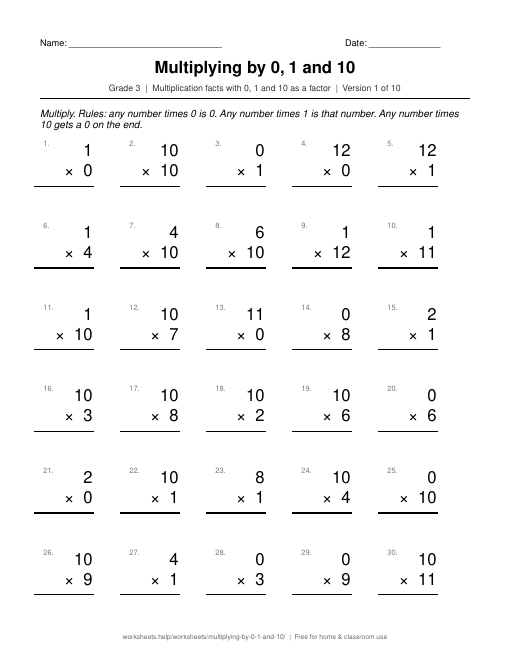
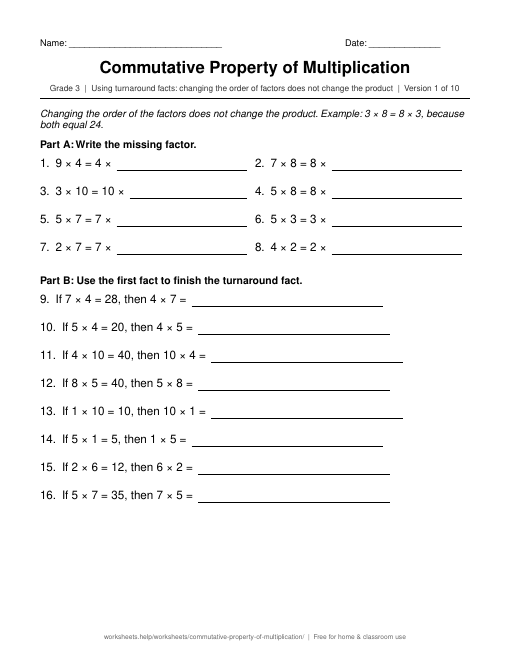
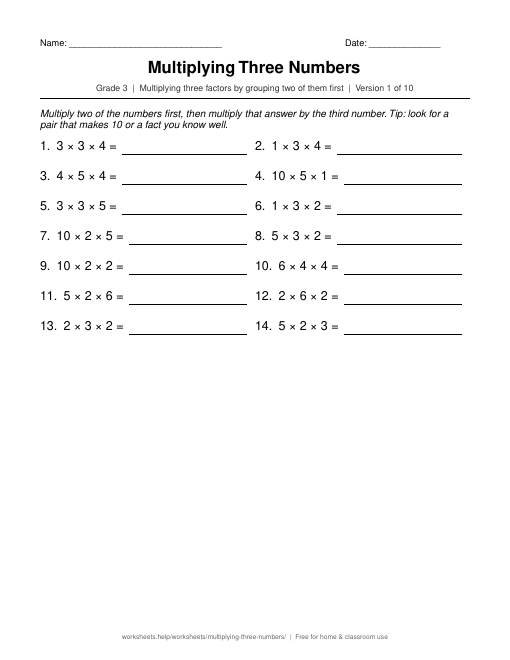
Related worksheets
About this worksheet
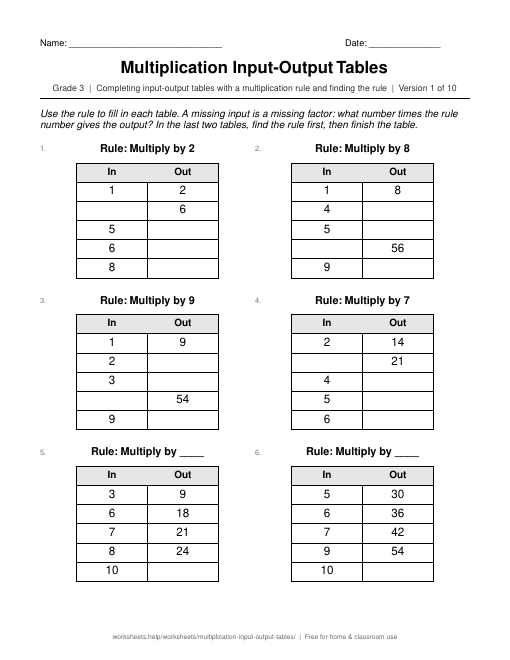
An input-output table works like a number machine. A number goes in, the rule changes it, and a new number comes out. With the rule "multiply by 4," an input of 3 gives an output of 12. Third graders are expected to know their multiplication facts and to find patterns in tables, and this third grade worksheet practices both at once.
The page has six tables with five rows each. In the first four tables, the rule is printed at the top, such as "Multiply by 7." The first row is filled in, three outputs are blank, and one input is blank. A missing input asks children to think backward: what number times 7 makes 42? The last two tables hide the rule. Four rows are complete, and children study them to find the rule, then fill in the last output. Every multiplier on a sheet is different, from 2 to 9, and inputs go from 1 to 10 in order. Each of the ten versions has new tables and its own answer key.
How to use it: have your child read the rule out loud and try the filled-in row first to see that it works. For a missing input, a multiplication chart or skip counting by the rule number can help. To find a hidden rule, divide one output by its input, then test that rule on every other row before writing it.
The answer key shows every missing number and both hidden rules. For the same tables with division, try our Division Input-Output Tables worksheet. For rules that add or subtract, try our Number Patterns: Find the Rule worksheet.