Short and Long Vowel Sounds Worksheets for 1st Grade
Home › 1st Grade › Reading & Writing
Download PDF worksheetAnswer key (PDF)Worksheet + answer key (2 pages)
Prints on one US Letter page; the answer key is a separate page. Print at 100% / "Actual size" on US Letter paper. Free for personal and classroom use.
Skill: Telling short and long vowel sounds apart in one-syllable words
Teaching tips and what to try next
For first graders who can read short-vowel CVC words and are starting to meet silent e and vowel teams. Using two hand signals, a quick tap for a short sound and a long slide for a long one, while saying each word helps children hear the difference before writing. Build on it with Silent E Words (CVCe) and Vowel Teams: ai, ay, ee, ea, oa, or go back to Short Vowel CVC Words: Fill in the Vowel for more short-vowel reading.
Related worksheets
About this worksheet
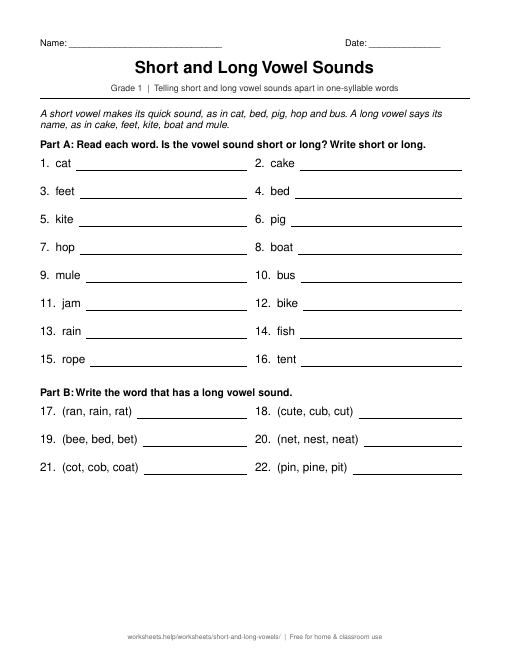
Every vowel can make more than one sound, and first graders learn to tell the short sound from the long one. A short vowel makes a quick sound, like the a in cat. A long vowel says its own name, like the a in cake. Hearing the difference helps children read new words and spell them correctly. This first-grade phonics worksheet practices sorting short and long vowel sounds.
Part A lists sixteen one-syllable words, such as cat, feet, pig and rope. Children read each word and write short or long on the line. Half the words have a short vowel, and half have a long vowel spelled with a silent e or with a vowel team such as ee, ai or oa. Part B gives six sets of three words, such as bed, bee and bet, and children write the one word in each set with a long vowel sound. The answer key lists every answer.
How to use it: read each word aloud together and stretch out the vowel sound. Ask your child whether the vowel says its name. If it does, the sound is long. Point out the clues in the spelling: an e at the end of the word, or two vowels side by side, usually means a long sound. A fun check is to switch a word between the two sounds, like cub and cube, and listen to how the meaning changes.
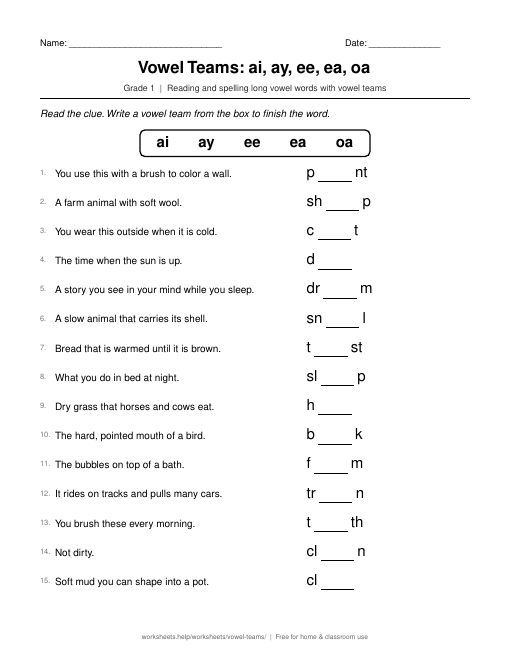
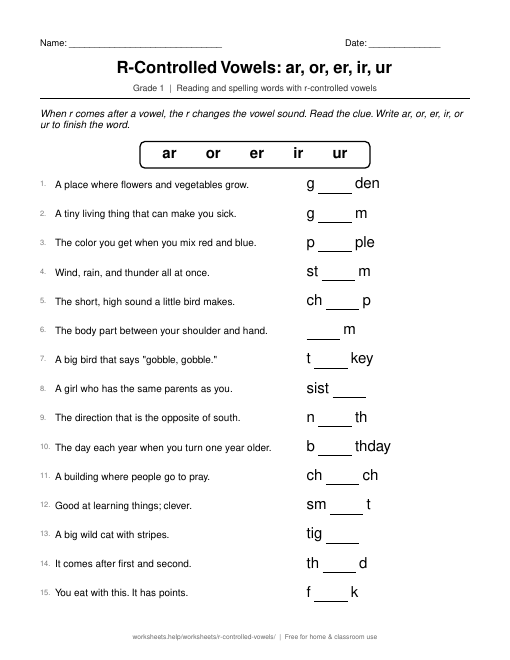
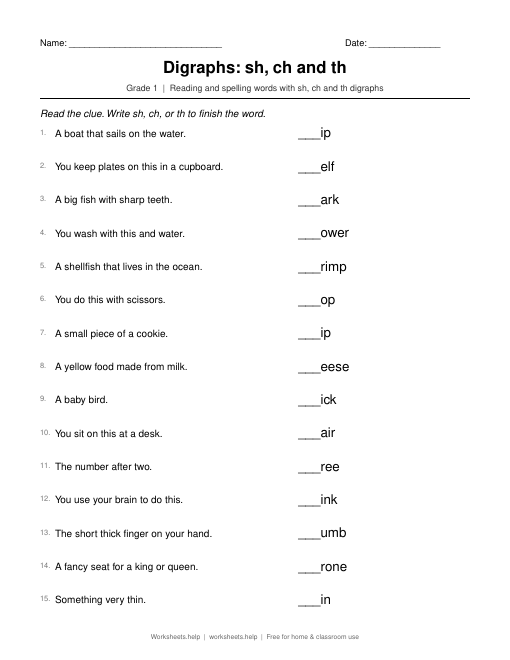
For more practice with short vowels, try our Short Vowel CVC Words worksheet. For long vowel spellings, try our Silent E Words worksheet and our Vowel Teams: ai, ay, ee, ea, oa worksheet.