Longer or Shorter? Compare Lengths Worksheets for Kindergarten
Home › Kindergarten › Math
Download PDF worksheetAnswer key (PDF)Worksheet + answer key (2 pages)
Prints on one US Letter page; the answer key is a separate page. Print at 100% / "Actual size" on US Letter paper. Free for personal and classroom use. Version 1 of 10. Choose another version.
Skill: Comparing two objects to see which is longer and which is shorter
Teaching tips and what to try next
A good fit for kindergartners who can say "long" and "short" but have not compared objects carefully yet. Some children pick the pencil that starts farther left or looks thicker, so run a finger along both pencils from the start line to the tips. Comparing amounts instead of lengths comes up in More or Less: Compare Numbers 0-10, and shapes get sorted in Sort and Count Shapes.
10 versions, each with its own answer key
Same skill and layout, a fresh set of problems in every version, so children can keep practicing without repeating a page. Problems are not repeated between versions unless a skill has only a small number of possible problems (for example, the addition facts within 10).
- Version 1: Sheet · Key · Both
- Version 2: Sheet · Key · Both
- Version 3: Sheet · Key · Both
- Version 4: Sheet · Key · Both
- Version 5: Sheet · Key · Both
- Version 6: Sheet · Key · Both
- Version 7: Sheet · Key · Both
- Version 8: Sheet · Key · Both
- Version 9: Sheet · Key · Both
- Version 10: Sheet · Key · Both
Download all 10 versions (one PDF)All 10 answer keys (PDF)
Make a new one
Want more practice? Make a brand-new Longer or Shorter? Compare Lengths sheet with fresh problems and its matching answer key, created right in your browser.
Related worksheets
About this worksheet
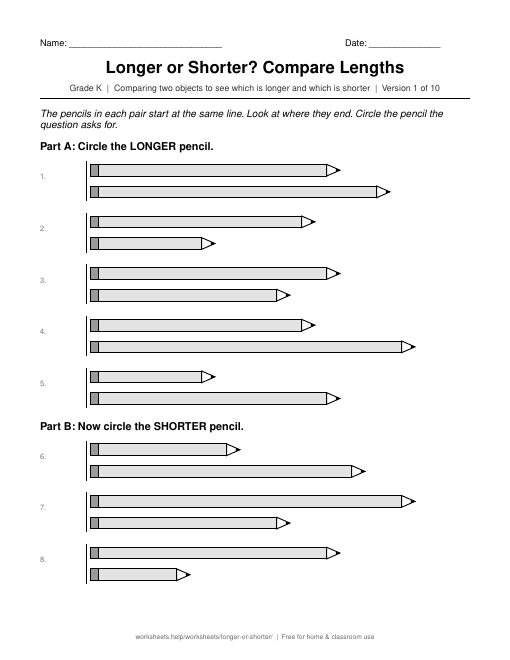
Before children measure with a ruler, they learn to compare. Holding two pencils side by side and saying which one is longer is the first step toward measuring length, and kindergartners are expected to compare two objects and describe the difference. This kindergarten worksheet gives that comparison a clear, simple format.
The page shows eight pairs of pencils. Each pair starts at the same line on the left, so children can look at the right ends to see which pencil goes farther. In Part A, five pairs ask children to circle the longer pencil. In Part B, three pairs switch the question and ask for the shorter pencil, so children have to read or listen to the direction instead of always circling the bigger one. The pencils in a pair always differ by a clear amount. Each of the ten versions has new pencil lengths and its own answer key.
How to use it: start with real objects. Line up two crayons, spoons or blocks at the edge of a table and ask, "Which one is longer? How do you know?" Point out that lining up the ends matters, because a short pencil can look long if it starts farther ahead. On the sheet, have your child put a finger on the right end of each pencil before choosing. When Part B begins, read the new word together.
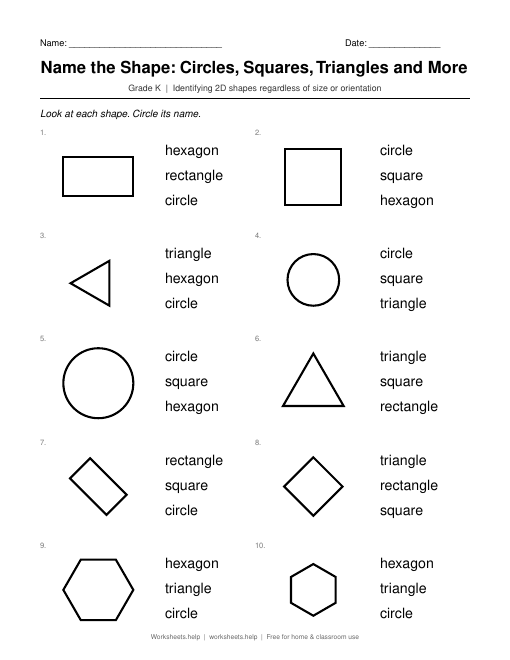
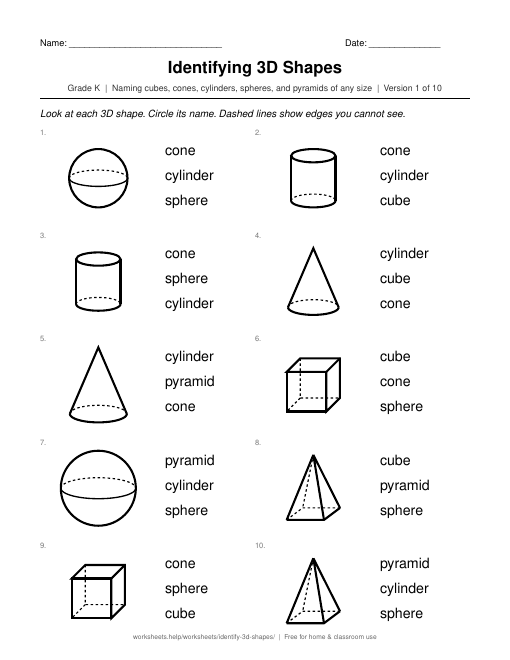
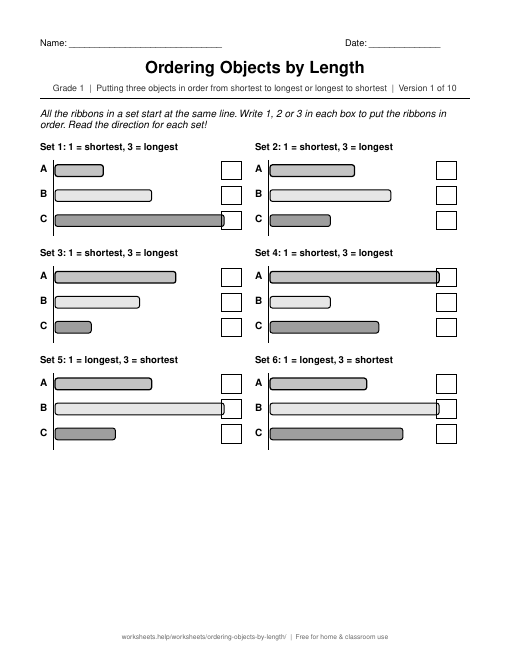
The answer key circles the correct pencil in each pair. For comparing numbers instead of lengths, try our More or Less: Compare Numbers 0-10 worksheet. For sorting by shape, try our Sort and Count Shapes worksheet.