Ordering Numbers to 20 Worksheets for Kindergarten
Home › Kindergarten › Math
Download PDF worksheetAnswer key (PDF)Worksheet + answer key (2 pages)
Prints on one US Letter page; the answer key is a separate page. Print at 100% / "Actual size" on US Letter paper. Free for personal and classroom use. Version 1 of 10. Choose another version.
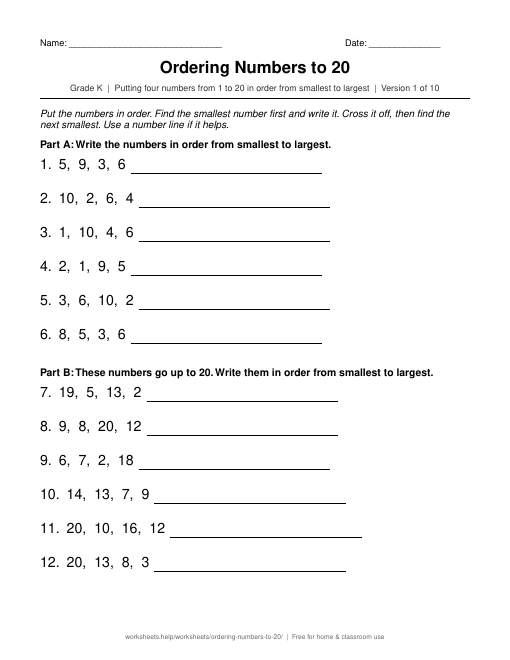
Skill: Putting four numbers from 1 to 20 in order from smallest to largest
Teaching tips and what to try next
Fits kindergartners who can count to 20 and tell which of two numbers is bigger, as in More or Less: Compare Numbers 0-10. Children often order by the first digit they see and put 12 before 9, so ask them to say each number out loud before writing. When both parts feel easy, try the longer counts in Missing Numbers 1-20 or step into Ordering Numbers and Counting to 120.
10 versions, each with its own answer key
Same skill and layout, a fresh set of problems in every version, so children can keep practicing without repeating a page. Problems are not repeated between versions unless a skill has only a small number of possible problems (for example, the addition facts within 10).
- Version 1: Sheet · Key · Both
- Version 2: Sheet · Key · Both
- Version 3: Sheet · Key · Both
- Version 4: Sheet · Key · Both
- Version 5: Sheet · Key · Both
- Version 6: Sheet · Key · Both
- Version 7: Sheet · Key · Both
- Version 8: Sheet · Key · Both
- Version 9: Sheet · Key · Both
- Version 10: Sheet · Key · Both
Download all 10 versions (one PDF)All 10 answer keys (PDF)
Make a new one
Want more practice? Make a brand-new Ordering Numbers to 20 sheet with fresh problems and its matching answer key, created right in your browser.
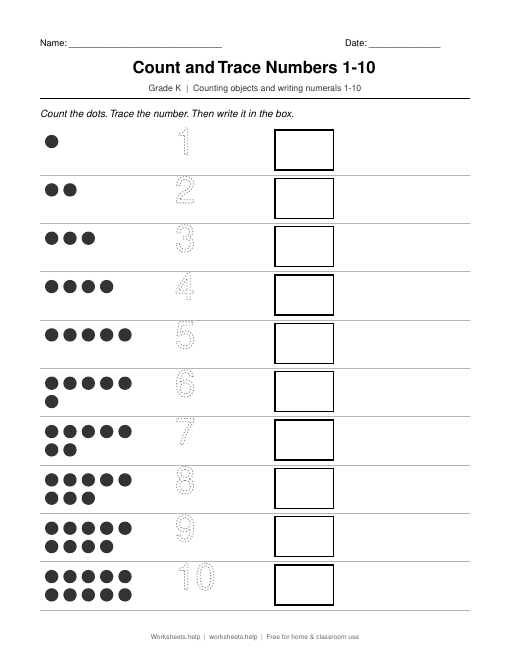
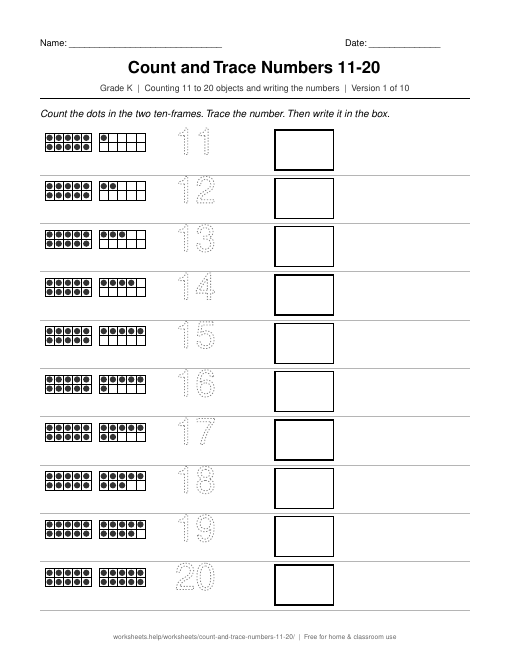
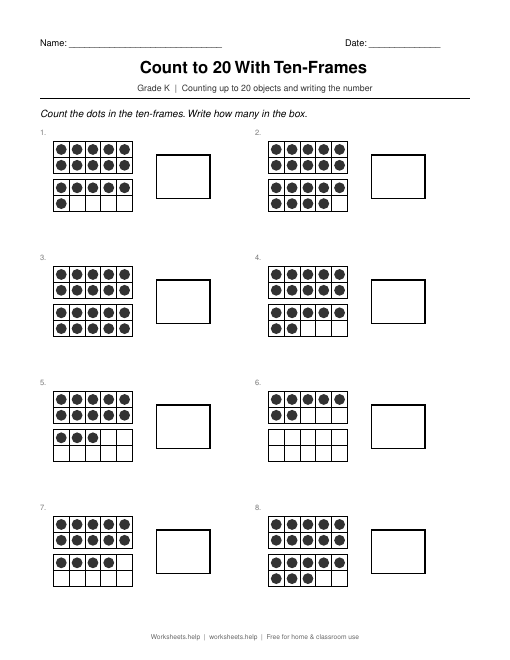
Related worksheets
About this worksheet
Putting numbers in order shows that a child knows more than the counting words. To write 3, 5, 6, 9, a kindergartner has to compare numbers, find the smallest one and keep track of which numbers are left. This kindergarten worksheet practices ordering small groups of numbers, first within 10 and then within 20.
The page has two parts with six rows each. In Part A, every row shows four different numbers from 1 to 10, printed in a mixed-up order, and children write them on the line from smallest to largest. In Part B, the numbers go up to 20, and every row includes at least one teen number, so children have to think about numbers like 12 and 17 as well as single digits. A row is never printed already in order. Each of the ten versions has new rows and its own answer key.
How to use it: show your child a simple routine. Look at all four numbers, find the smallest, write it and cross it off. Then do the same with the three numbers that are left. A number line or a strip of paper numbered 1 to 20 is a big help for Part B, because your child can point to each number and see which one comes first. For a hands-on start, write the numbers on sticky notes and let your child move them into order.
The answer key lists every row in order. To count forward from any number, try our Counting Forward from Any Number worksheet. For numbers next to each other, try our Before, After and Between Numbers to 20 worksheet.