Interjections Worksheets for 5th Grade
Home › 5th Grade › Reading & Writing
Download PDF worksheetAnswer key (PDF)Worksheet + answer key (2 pages)
Prints on one US Letter page; the answer key is a separate page. Print at 100% / "Actual size" on US Letter paper. Free for personal and classroom use.
Skill: Choosing the interjection that shows the feeling in a sentence
Teaching tips and what to try next
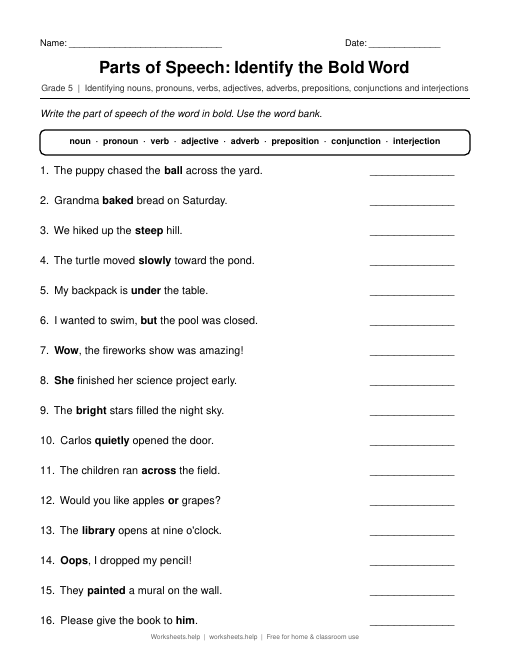
Fits fifth graders who can name nouns, verbs and adjectives and are ready for the smaller parts of speech. Comic strips and the dialogue in novels are packed with interjections, so hunt for a few and talk about the punctuation that follows each one. Review every part of speech in Parts of Speech: Identify the Bold Word, and see how other small words connect ideas in Correlative Conjunctions.
Related worksheets
About this worksheet
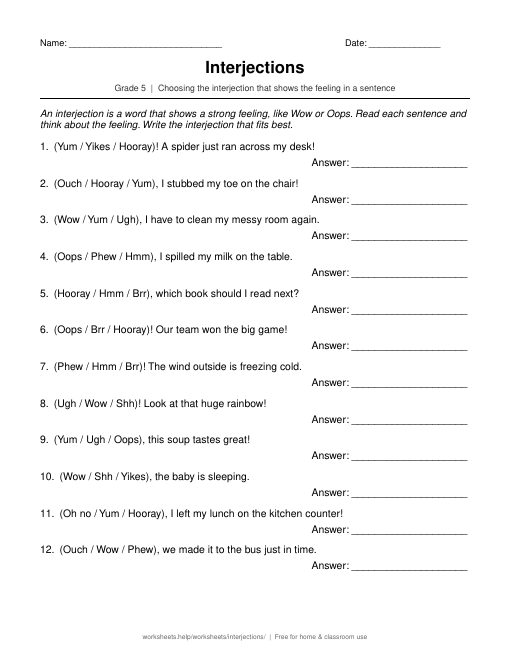
An interjection is a word that shows a quick, strong feeling, such as Wow, Oops, Ouch or Phew. Interjections often sit at the start of a sentence and are followed by an exclamation point or a comma. Fifth graders are expected to explain the job of interjections in sentences, and this fifth-grade grammar worksheet asks children to match each interjection to the feeling it shows.
The page has twelve sentences. Each one starts with three interjections in parentheses, and the rest of the sentence tells what happened, such as stubbing a toe, winning a game or spilling milk. Children decide which feeling fits and write that interjection on the answer line. Each interjection is the right answer exactly once on the page, and the right answer moves around among the three choices from one sentence to the next.
How to use it: before starting, brainstorm feelings with your child, such as pain, joy, surprise, relief, disgust and being cold, and name an interjection for each. Then have your child read the end of each sentence first, because that part holds the clue. Talk about punctuation too: a strong feeling usually gets an exclamation point after the interjection, while a milder one gets a comma. Reading the finished sentences aloud with expression is the fun part.
The answer key gives every interjection. To review all the parts of speech, try our Parts of Speech: Identify the Bold Word worksheet. For other words that join ideas, try our Correlative Conjunctions worksheet.