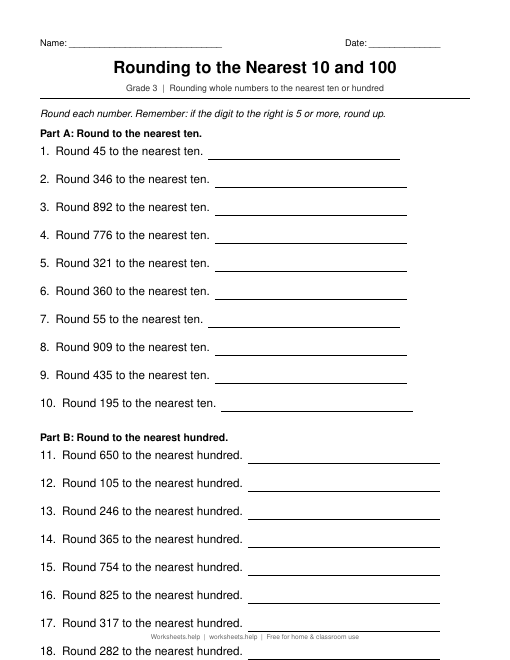
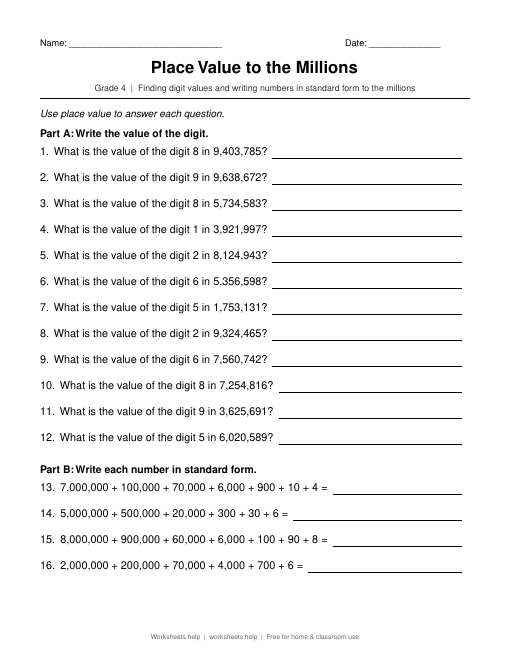
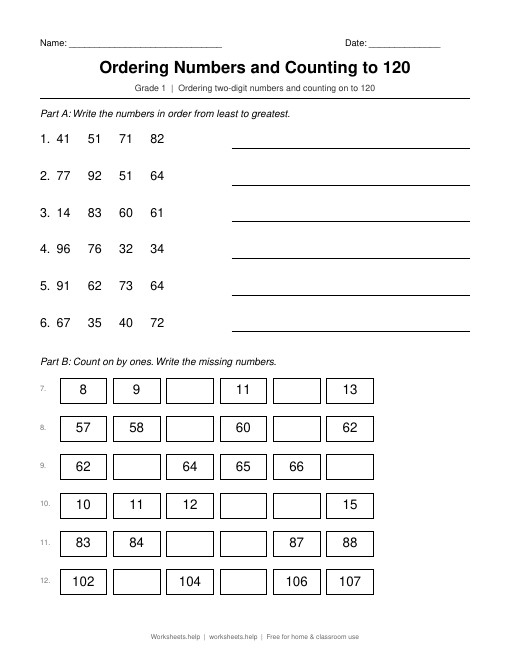
Comparing Two-Digit Numbers (>, <, =)
Download PDF worksheetAnswer key (PDF)Worksheet + answer key (2 pages)
Prints on one US Letter page; the answer key is a separate page. Print at 100% / "Actual size" on US Letter paper. Free for personal and classroom use. Version 1 of 10. Choose another version.
Skill: Comparing two-digit numbers with the symbols >, <, and =
10 versions, each with its own answer key
Same skill and layout, a fresh set of problems in every version, so children can keep practicing without repeating a page. Problems are not repeated between versions unless a skill has only a small number of possible problems (for example, the addition facts within 10).
- Version 1: Sheet · Key · Both
- Version 2: Sheet · Key · Both
- Version 3: Sheet · Key · Both
- Version 4: Sheet · Key · Both
- Version 5: Sheet · Key · Both
- Version 6: Sheet · Key · Both
- Version 7: Sheet · Key · Both
- Version 8: Sheet · Key · Both
- Version 9: Sheet · Key · Both
- Version 10: Sheet · Key · Both
Download all 10 versions (one PDF)All 10 answer keys (PDF)
Make a new one
Want more practice? Make a brand-new Comparing Two-Digit Numbers (>, <, =) sheet with fresh problems and its matching answer key, created right in your browser.
About this worksheet
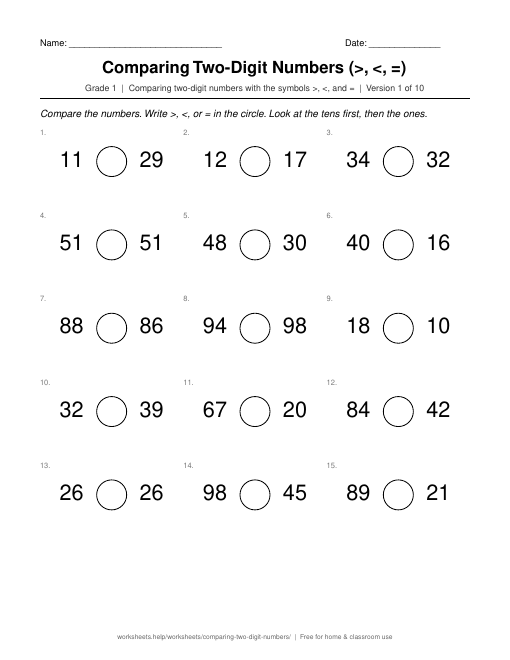
Comparing numbers is one of the first places where place value really matters. To decide whether 47 or 52 is greater, children look at the tens first, and only check the ones when the tens are the same. This first-grade worksheet gives fifteen pairs of two-digit numbers between 10 and 99. Children write >, <, or = in the circle between each pair.
Six of the pairs share the same tens digit, such as 63 and 68, so children practice the second step of comparing the ones. A couple of pairs are equal, which reminds children that the equal sign is a real choice and not just a place to write an answer.
How to use it: before starting, show two numbers with base-ten blocks or a hundred chart so your child can see which is bigger. Many children like the alligator trick: the open mouth eats the bigger number. Read each finished comparison aloud, such as "fifty-two is greater than forty-seven," so the symbol and the words stay connected. If a mistake happens, ask, "How many tens does each number have?"
The answer key shows the correct symbol for every pair. This worksheet supports Common Core standard 1.NBT.B.3 (compare two two-digit numbers based on meanings of the tens and ones digits, recording the results with the symbols >, =, and <). It pairs well with our Place Value: Tens and Ones and Ordering Numbers to 120 worksheets.