Converting Units of Measurement
Download PDF worksheetAnswer key (PDF)Worksheet + answer key (2 pages)
Prints on one US Letter page; the answer key is a separate page. Print at 100% / "Actual size" on US Letter paper. Free for personal and classroom use. Version 1 of 10. Choose another version.
Skill: Converting larger units to smaller units of length, weight, time, and volume
10 versions, each with its own answer key
Same skill and layout, a fresh set of problems in every version, so children can keep practicing without repeating a page. Problems are not repeated between versions unless a skill has only a small number of possible problems (for example, the addition facts within 10).
- Version 1: Sheet · Key · Both
- Version 2: Sheet · Key · Both
- Version 3: Sheet · Key · Both
- Version 4: Sheet · Key · Both
- Version 5: Sheet · Key · Both
- Version 6: Sheet · Key · Both
- Version 7: Sheet · Key · Both
- Version 8: Sheet · Key · Both
- Version 9: Sheet · Key · Both
- Version 10: Sheet · Key · Both
Download all 10 versions (one PDF)All 10 answer keys (PDF)
Make a new one
Want more practice? Make a brand-new Converting Units of Measurement sheet with fresh problems and its matching answer key, created right in your browser.
Related worksheets
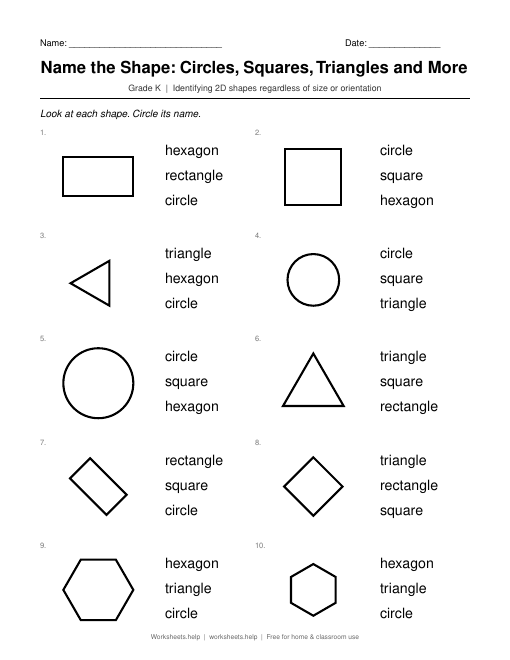 Name the Shape: Circles, Squares, Triangles and More
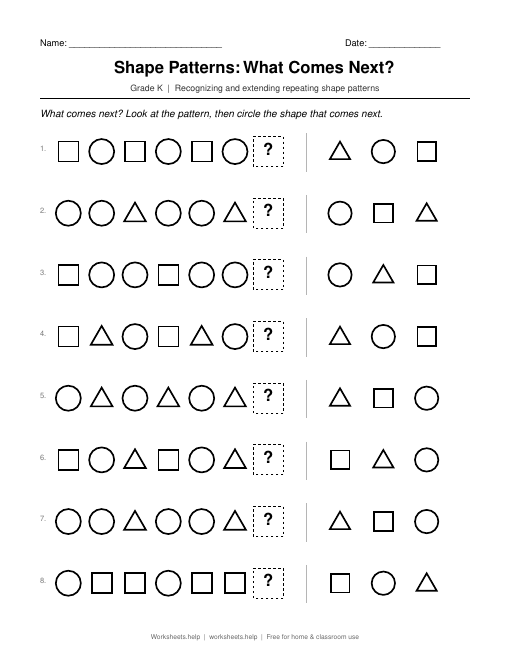 Shape Patterns: What Comes Next?
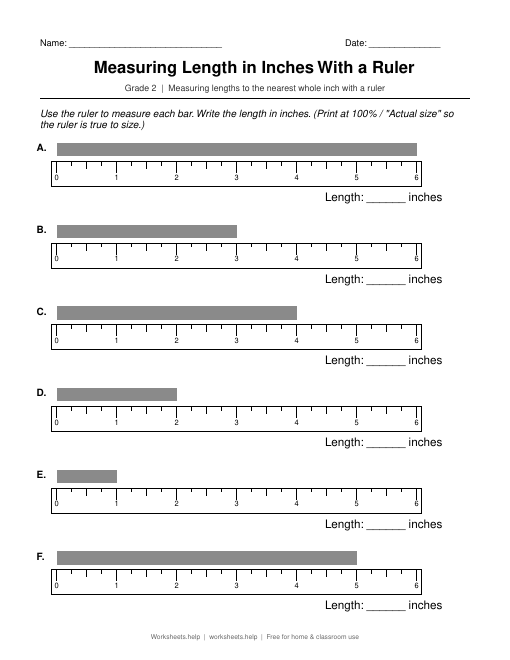 Measuring Length in Inches With a Ruler
About this worksheet
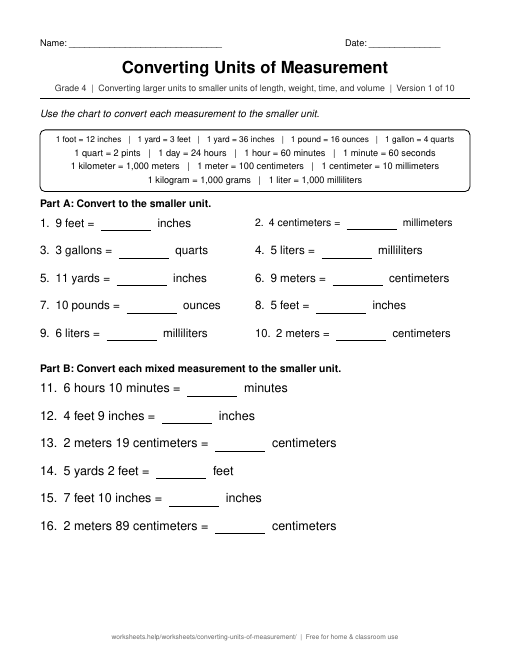
Fourth graders learn to change a measurement from a larger unit to a smaller one, such as feet to inches or hours to minutes. The key idea is that a smaller unit takes more pieces to make the same amount, so the number gets bigger. This fourth-grade worksheet has a conversion chart at the top and sixteen problems below it.
Part A gives ten conversions from a larger unit to a smaller unit, such as 7 feet = ___ inches or 4 kilograms = ___ grams. The problems mix customary units (feet, yards, inches, pounds, ounces, gallons, quarts, and pints), metric units (kilometers, meters, centimeters, millimeters, kilograms, grams, liters, and milliliters), and time. Part B gives six mixed measurements, such as 3 feet 4 inches, which students change into the smaller unit by multiplying and then adding the extra amount.
How to use it: read the conversion chart together first and point out the pattern: 1 foot is 12 inches, so 5 feet is 5 groups of 12. Students can make a two-column table, such as feet and inches, to see the pattern grow. For Part B, remind students to add the leftover inches or minutes after they multiply. The ten versions never repeat a problem.
The answer key lists every converted amount. This worksheet supports Common Core standard 4.MD.A.1 (know relative sizes of measurement units within one system of units and express measurements in a larger unit in terms of a smaller unit). Review our Multi-Digit Multiplication worksheet for the multiplication used here, and try our Elapsed Time worksheet for more time practice.